College Lacrosse Recruiting, Explained

Most families start this process the same way: a coach mentions “recruiting” at a spring tournament, and a parent goes home and searches for what that means. This page is the answer we wish had existed. It covers the rules, the calendar, what coaches actually look at, and how to figure out which programs are realistic for your player. It draws on 500+ NCAA and NAIA programs and more than 41,000 tracked college commits.
Start with the numbers
About 14% of high school lacrosse players go on to play at any NCAA level. Roughly 3% reach Division I. A D1 program has 12.6 scholarships to split across the whole roster, so full rides are rare even at the top.
None of that is a reason to stop. It is a reason to aim at the right programs. There are 571 colleges with lacrosse in our database, 571 women's and 404 men's programs across D1, D2, D3 and NAIA, and the large majority of college lacrosse is played outside Division I. Families who only look at the 20 names they know are choosing from a list that is missing most of the options.
The September 1 rule
For Division I, coaches can't contact a player directly until September 1 of junior year. Before that date they can't call, text, email or make an offer. They can answer yes-or-no questions from your club or high school coach, and that is all.
On September 1 of junior year, everything opens at once: calls, texts, emails, verbal offers and official visit scheduling. That's why the date matters, and why the two years before it are the ones families waste. The work you do as a freshman and sophomore decides whose phone rings that morning.
D2, D3 and NAIA run on looser calendars, and much of the recruiting for those programs happens later, through senior year. The full calendar by division is on the recruiting timeline.
What to do each year
Freshman year. Play, get film, and build a wide list. Thirty schools is not too many at this point. Find out which divisions and tiers fit your player's level, then fill the list from those, not from the programs on TV. Coaches can't contact you yet, so this year is about you learning the map.
Sophomore year. Update your film and send introductory emails to coaches. Keep them short: name, grad year, position, club, a link to film, and the one or two things a coach would want to know. Register with the NCAA Eligibility Center. Go to prospect days and camps at schools on your list, because those are the events where a coach can watch you in person before contact rules open. Service academy coaches can make offers starting July 1.
Junior year. August 1: campus visits open for D1. September 1: full contact. If your list was built well, this is when it pays off. If a coach you emailed hasn't responded by mid-fall, that is an answer, and it is time to move that school down and another up.
Senior year. Early signing in November, regular signing in February and April. The National Letter of Intent was eliminated in October 2024; commitments are now formalized through written offers and financial aid agreements. D3 and NAIA recruiting is often still active through the spring.
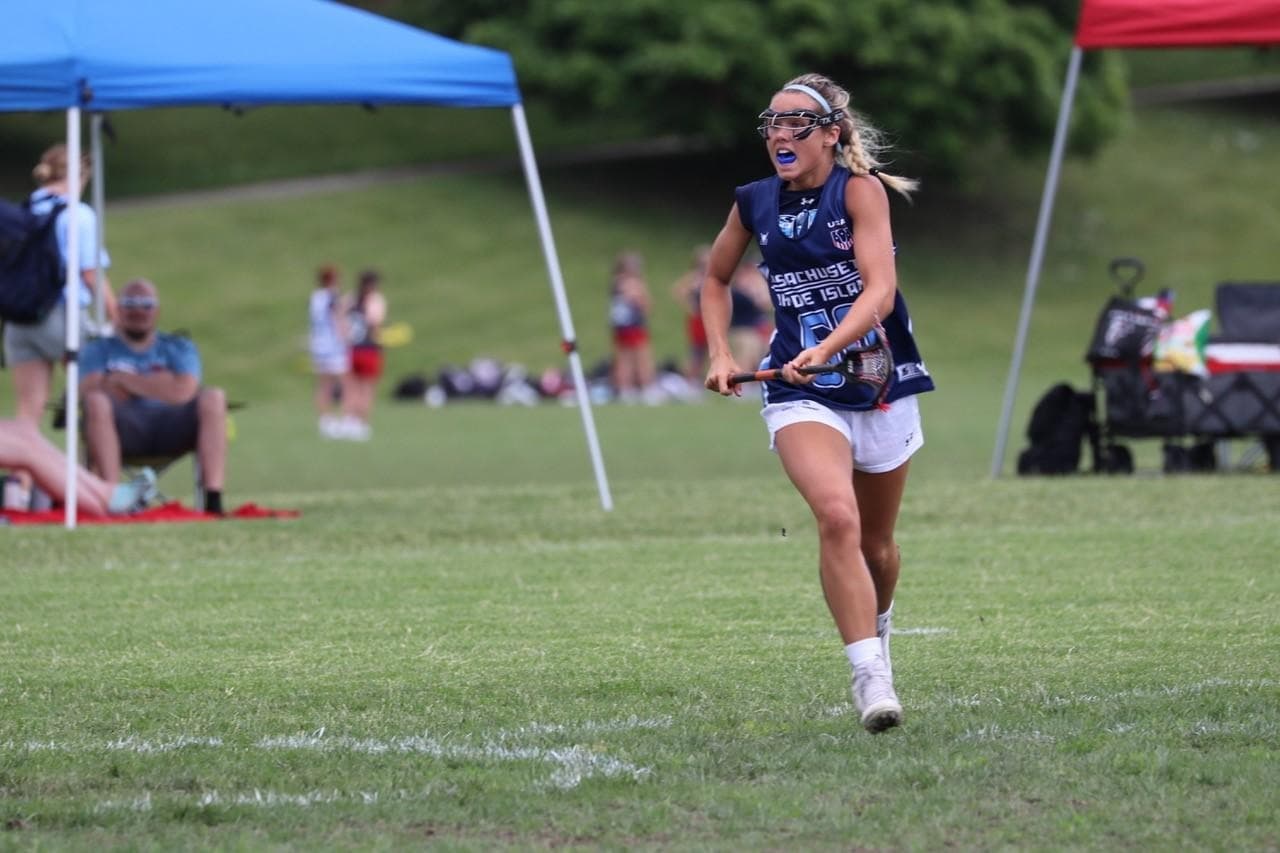
What coaches actually look at
Coaches see hundreds of players a summer. What separates the ones they follow up on is fit before talent: does this player's level match the roster's level, and does the academic profile clear admissions? A D1 coach recruiting a tier-3 roster is not going to spend a call on a player who projects to tier 8, however good the film. The reverse is also true. A tier-8 program will not chase a player who is clearly headed higher.
This is where most of the guessing happens, and it is the one part of the process that is measurable. Our 12-tier rankings place every program by the level of player it has actually recruited, using tracked commits, not opinions. The Fit Score takes your player's club, position and rank and shows which tiers players like them have landed in. It takes about two minutes and the first result is free.
Where your club fits in
Club is the single strongest predictor of where a player commits, because coaches recruit through relationships with club programs they trust. The club rankings show, for every club with tracked commits, how many players went to D1, D2, D3 and NAIA programs and to which schools. If your club sends most of its players to D3, that is useful to know in freshman year, not senior year.
Only a small number of clubs nationally have real recruiting relationships with college coaches. Most don't. That doesn't close the door; it means the family does the finding. About 80% of college programs will not discover a player on their own.
Where people go wrong
Two mistakes account for most of the wasted years we see. The first is a list that is all D1 because those are the names everyone knows, with no D2, D3 or NAIA programs on it until senior year forces the issue. The second is treating a camp invitation as interest. Camps are a revenue line for programs; the invitation went to thousands of players. Attendance is useful when the school is already on your list. It is not a signal by itself.
Where to go next
- Recruiting timeline: the calendar for every division, by grade.
- Prospect days and camps: every college event we can find, refreshed each morning.
- College directory: all 571 schools, with coach contacts, rosters and schedules, by division and state.
- Rankings: 500+ programs in 12 tiers.
- Find your fit: two minutes, free.
Questions parents ask
When should we start?
Freshman year, for the list and the film. Contact with D1 coaches opens September 1 of junior year, and nothing you send before then is read by a D1 coach, but a sophomore's email and film are what they open that day.
Do we need a club?
For D1, a club with a track record of college placements matters a lot. For D3 and NAIA, high school play plus direct contact with coaches gets many players recruited every year. The club rankings show which clubs have sent players where.
Is D3 real college lacrosse?
On the boys' side, more tracked commits go to D3 programs than to any other division. Many D3 programs recruit players who could have played D2 and chose the school instead.
How much does it cost?
The rules, the timeline, the college directory, the rankings and the first Fit Score are free. The full tier breakdown and coach contacts are part of the paid plan. See plans.
Program counts and commit totals derive from the Recruit Plan database at build time; data updated 2026-09-17. Rate figures are from published NCAA participation data and are shown on the timeline.